Professional Bathroom Tiling in Adelaide
The tiles are what everyone sees. We make sure the work behind them means those tiles stay perfect for decades.
Our Approach to Tiling in Adelaide
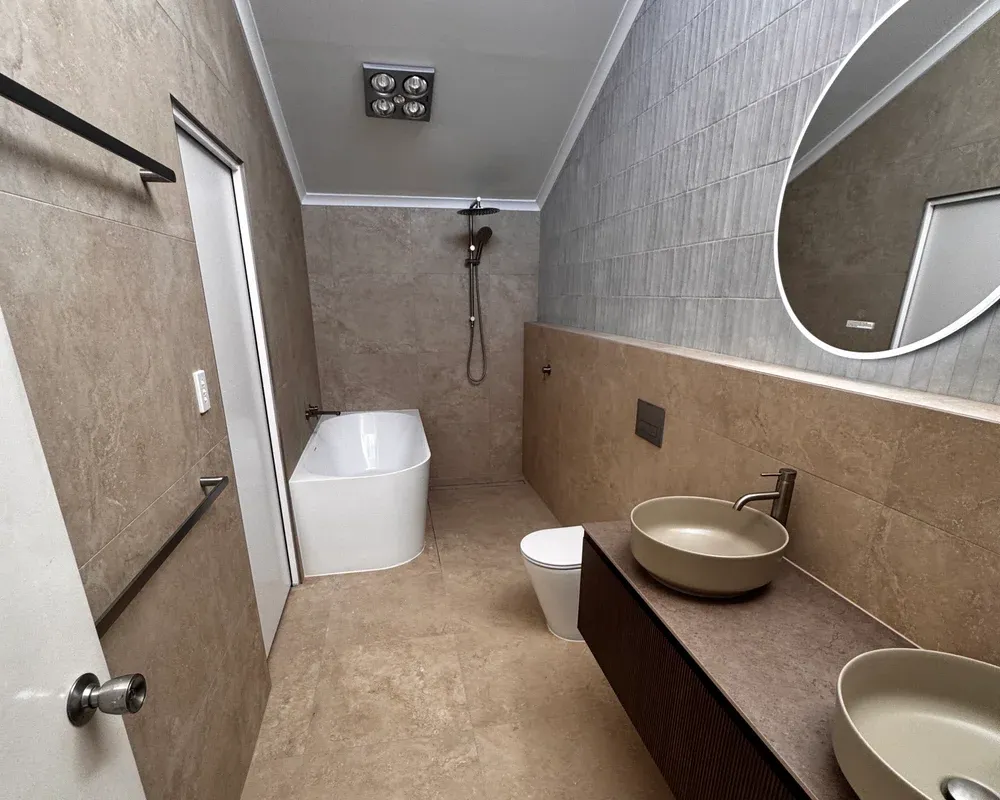
Tiling is the most visible element of any bathroom renovation, and the one where the difference between competent and excellent work is immediately apparent to anyone who walks in. Grout lines that aren't consistent, tiles that are fractionally out of level, lippage between adjacent large-format tiles, cuts around fixtures that don't line up — these are the details that separate a bathroom that looks genuinely good from one that looks like a renovation.
The quality of a tiling job is determined long before the first tile is laid. It starts with substrate preparation — ensuring floors are level, walls are plumb, and surfaces are properly primed and keyed to accept adhesive. A floor that's 5mm out of level across a room creates a visually obvious tilt in large-format tiles. A wall with a bow in it creates a visible ripple in the finished tile surface. We fix these issues before tiling, not around them.
Adelaide's housing stock presents particular challenges for tilers. Older homes — particularly the 1880s–1960s character homes of Norwood, Unley, Prospect, and Port Adelaide — have suspended timber floors that flex under load. This movement is incompatible with rigid tiling systems. We use flexible polymer-modified adhesives and grouts in these situations that accommodate minor movement without cracking. For concrete slab homes (more common in the northern and southern suburbs), standard rigid adhesive systems are appropriate and more cost-effective.
Tile selection is also part of our service. We work with all the major Adelaide tile suppliers and understand what's available at different price points. If you've selected tiles and want professional installation, we'll provide an honest assessment of how the tile will perform in your specific situation before we start. If you want guidance on selection, we can help shortlist options based on your aesthetic, your budget, and the practical requirements of the installation.
Everything in Your Quote
- Floor, wall, shower recess, and splashback tiling
- Large format tile installation (600mm+)
- Pattern and feature tile work
- Wet area and non-slip tile specification
- Grout selection and pointing to complement tile choice
- Tile removal and substrate preparation
Common Problems We Solve
- Drummy tiles throughout existing floor or shower
- Cracked grout allowing moisture ingress
- Builder-grade tiles that look dated and cheap
- Poorly cut tiles around waste and fixtures
- Uneven substrate causing lippage in large-format tiles
How It Works
-
Tile Layout Planning
We mark out the layout before the first tile is set — checking centring, cuts, pattern alignment, and ensuring feature elements fall in the right places. No fixing errors later.
-
Substrate Preparation
Sound tiling starts with sound surfaces. We check floors for flex and level, walls for plumb and straightness, and repair any defects before adhesive goes down.
-
Adhesive & Setting
Correct adhesive for the tile type and location. Large format tiles on floors require specific techniques to avoid lippage and ensure full adhesive coverage. We use polymer-modified products throughout.
-
Grouting & Sealing
Grout colour matters as much as tile colour. We help you choose the right grout and apply it cleanly. Grout sealant applied to porous grouts as a final step.
Ready for a Fixed-Price Quote?
No obligation, no sales pressure. Ryan visits your home, takes measurements, and provides a written quote covering every element of your tiling.
Frequently Asked Questions
Sometimes — but it's not always advisable. Tiling over existing tiles only works if the original tiles are completely sound (no drummy tiles, no cracks), the combined thickness won't cause issues with door clearances or fixtures, and the additional weight is appropriate for the substrate. In a bathroom renovation we almost always recommend stripping the original tiles so we can inspect and repair the waterproofing and substrate underneath. We'll give you an honest assessment for your specific situation.
A drummy tile sounds hollow when tapped — it indicates the tile has separated from the adhesive or substrate underneath. This happens when original installation had insufficient adhesive coverage, when the substrate has moved, or when moisture has compromised the bond. Drummy tiles are at risk of cracking or lifting, and they indicate that the adhesive system underneath has failed. The only correct fix is removal and relay — topical treatments don't work.
Large format tiles require a quality wet-cutting tile saw with a diamond blade — not a simple score-and-snap tile cutter. We have the right equipment for any tile size, including rectified porcelain tiles which are particularly unforgiving of poor cutting technique. We also have angle grinders with diamond cups for curved cuts around pipes and architraves.
For most straightforward rectangular rooms with standard tile layouts, budget 10–15% wastage. For diagonal layouts, complex rooms, or very large tiles with longer cuts, budget 15–20%. We'll calculate your exact requirement at quoting stage based on the specific tile size and your room dimensions, and advise on how many extra tiles to keep in reserve for future repairs.
Counter-intuitively, larger tiles often make small bathrooms feel bigger — not smaller. A 600×600mm or 600×1200mm tile with fine grout joints creates a calmer visual field with fewer lines chopping up the space. Small mosaic tiles (50×50mm) on a floor can look busy and make the room feel cramped. That said, if you're working with a room that has lots of awkward angles, smaller tiles reduce the proportion of cut tiles, which is a practical consideration. We'll advise on what works for your specific room.
Using the same tile on floor and walls is a popular contemporary approach — it creates a seamless, cocoon-like feel and can make a small bathroom feel much larger. However, there's an important technical caveat: floor tiles must have an appropriate slip resistance rating (P3 or better for domestic bathrooms to comply with AS 4586), and wall tiles specified for wall-only use may not meet this. If you want the same tile look on floor and wall, we need to check the slip resistance rating of the tile you've chosen before specifying it on the floor.
Tiling by Adelaide Suburb
We've put together detailed guides for bathroom tiling in specific Adelaide suburbs — including local housing characteristics, common problems we see in those areas, and suburb-specific pricing notes.
Tiling Across Adelaide
We provide bathroom tiling services across greater Adelaide — from the inner-eastern suburbs of Norwood and Burnside, to the beachside communities of Glenelg and Brighton, and across the northern and southern growth corridors.
Related Services
Many of our clients combine tiling with one of these services for a complete result.
Ready to Start Your Tiling?
Get a free, fixed-price quote for your bathroom tiling in Adelaide. On-site consultation, written quote, no obligation.